If you’re not completely satisfied with the appearance of your teeth, you may have considered getting veneers. Veneers are a popular cosmetic dental treatment option for fixing various dental issues, such as chipped teeth, crooked teeth, gaps between teeth, and stained teeth. However, veneers may not be suitable for everyone due to their cost, invasiveness, […]
The post Best Alternatives to Veneers for Teeth appeared first on East Valley Dental Professionals.
]]>If you’re not completely satisfied with the appearance of your teeth, you may have considered getting veneers. Veneers are a popular cosmetic dental treatment option for fixing various dental issues, such as chipped teeth, crooked teeth, gaps between teeth, and stained teeth. However, veneers may not be suitable for everyone due to their cost, invasiveness, or other factors. In this article, we will explore the best alternatives to veneers that can help you achieve a beautiful smile without the need for extensive dental treatment.
What are veneers?
Dental veneers are thin shells made of porcelain or composite materials that are bonded to the front surface of your teeth. They are custom-made to match the color and shape of your natural teeth, providing a seamless and natural-looking result. Veneers can effectively cover dental imperfections and enhance the appearance of your smile.
Why look for alternatives?
While veneers can deliver impressive results, they may not be the right choice for everyone. Some people may have concerns about the invasiveness of the procedure, the cost, or the potential risks associated with altering the natural tooth structure. Therefore, it is important to explore alternative options that are less invasive, more affordable, or better suited to your specific dental needs.
Non-Invasive Options
Tooth Whitening
If your main concern is tooth discoloration or staining, tooth whitening may be a suitable alternative to veneers. This cosmetic dental treatment involves using bleaching agents to lighten the color of your teeth and remove stains. Tooth whitening can help you achieve a brighter and whiter smile, enhancing the overall appearance of your teeth.
Dental Bonding
Another non-invasive alternative to veneers is dental bonding. Dental bonding is a procedure in which a tooth-colored resin material is applied to your teeth and then hardened with a special light. This bonding material can effectively cover minor imperfections such as chips, cracks, or gaps, giving your teeth a more even and attractive appearance.
Veneers vs. Clear Aligners
When considering options for improving your smile, it’s important to know when to consider clear aligners and when to consider veneers, as each serves a specific purpose. Clear aligners, such as Invisalign, are the go-to choice when orthodontic correction is needed. If you have misaligned teeth, gaps, or bite issues, clear aligners can gradually and discreetly straighten your teeth, all while allowing for easy removal during meals and oral care routines.
However, it’s important to note that veneers involve a minor removal of enamel and are a non-reversible procedure. Ultimately, the choice between clear aligners and veneers depends on your specific dental needs and goals, with some individuals even opting for a combination of both to achieve a complete smile makeover. To make an informed decision, consult with a dentist or orthodontist who can assess your unique circumstances and guide you toward the most suitable solution for your smile.
Dental Crowns as an Alternative
What are dental crowns?
Dental crowns, also known as caps, are tooth-shaped coverings that are placed over damaged or heavily filled teeth. They can be made of porcelain, metal, or a combination of both. Dental crowns are used to restore the shape, strength, and appearance of your teeth, providing a natural and aesthetically pleasing result.
Comparison between veneers and dental crowns
While both veneers and dental crowns can improve the appearance of your teeth, they are used for different purposes. Veneers are mainly used to enhance the aesthetics of your smile by covering the front surface of your teeth. On the other hand, dental crowns are used to restore and protect heavily damaged or weakened teeth. Therefore, if your teeth require significant structural support in addition to cosmetic improvement, dental crowns may be a suitable alternative to veneers.
Veneer Considerations
Composite Veneers
If cost is a major consideration for you, composite veneers can be a more affordable alternative to porcelain veneers. Composite veneers are made of a tooth-colored resin material that is directly applied and shaped on your teeth. While composite veneers may be less durable than porcelain veneers, they can still effectively improve the appearance of your teeth at a more affordable price point.
Porcelain Veneers vs. Composite Veneers
When comparing porcelain veneers and composite veneers, it’s important to consider the factors of durability and longevity. Porcelain veneers are known to be more durable and resistant to staining than composite veneers. However, composite veneers can be a temporary or more budget-friendly option, especially if you are looking for a cosmetic improvement for a shorter period of time.
Affordable alternatives to veneers
In addition to composite veneers, there are other affordable alternatives to veneers that you can explore. One such option is enamel shaping, which involves contouring and reshaping your natural teeth to improve their appearance. Dental contouring can effectively address minor issues, such as uneven teeth or small chips, without the need for extensive dental treatment.
Taking Care of Your Teeth without Veneers
Good oral hygiene practices
Regardless of whether you have veneers or not, maintaining good oral hygiene practices is essential for keeping your teeth healthy and beautiful. Brush your teeth at least twice a day, floss daily, and use mouthwash to remove plaque and prevent tooth decay. Good oral hygiene can help preserve the health of your natural teeth and reduce the need for extensive dental treatments.
Regular dental check-ups
Regular visits to your dentist are crucial for maintaining the health of your teeth and identifying any potential dental issues early on. Your dentist can provide professional cleanings, check for signs of tooth decay or gum disease, and offer guidance on how to best care for your teeth. By staying proactive with your dental care, you can minimize the need for cosmetic treatments such as veneers.
Consulting an experienced cosmetic dentist near you
For personalized guidance on the best solution to enhance your smile, we invite you to seek a professional opinion at East Valley Dental Professionals, located in Mesa, Arizona, and serving Mesa, Tempe, Chandler, and Gilbert. Dr. Nathan Smith and his experienced team are committed to providing comprehensive dental care and will help you make an informed decision about whether clear aligners or veneers are the right choice for your unique dental needs. Your journey to a brighter, more confident smile begins with a consultation at East Valley Dental Professionals, where expert care meets exceptional results.
The post Best Alternatives to Veneers for Teeth appeared first on East Valley Dental Professionals.
]]>Dental veneers are often used to fix chipped or damaged teeth, or just to give you the perfect smile. But there’s a lot to know before you can get started. Read on to learn everything you need to know about the different types of veneers. What Are Dental Veneers Exactly? Dental veneers are a popular […]
The post Types of Veneers appeared first on East Valley Dental Professionals.
]]>Dental veneers are often used to fix chipped or damaged teeth, or just to give you the perfect smile. But there’s a lot to know before you can get started. Read on to learn everything you need to know about the different types of veneers.
What Are Dental Veneers Exactly?
Dental veneers are a popular method of cosmetic dentistry. There are installed on top of your existing teeth to give more support and a fuller, brighter smile. Veneers can be used to fix cracked, chipped, discolored or otherwise damaged teeth.
In some cases, they are also added solely for their visual benefits. They are custom fit to your teeth, using whatever shape and coloration give your teeth the best visual appearance.
4 Types of Veneers
The type of veneer right for you depends on your budget and what function your veneers will serve. They can be made from many different materials, most notably porcelain or composite resin for permanent veneers.
For clip-on veneers or veneers that are not intended to last as long, there are other options for materials. In general, there are four main types of veneers.
1. Porcelain Veneers
Porcelain veneers are the most robust and longest lasting, however their high quality can come at a price. The ceramic material is the most durable option, lasting longer and requiring less frequent maintenance then other options. Porcelain veneers cost between $500 – $2,500 per tooth and last anywhere from 10 to 20 years.
Porcelain is also the highest quality material a veneer can be constructed from. They resist staining and are less likely to chip. Porcelain is also the texture most similar to your natural teeth. This will give your veneers a more healthier-looking exterior and a more natural feel.
2. Composite Veneers
Composite resin is one of the more common materials used to make veneers. They function similarly to porcelain veneers, but last a slightly shorter amount of time.
Composite veneers are less expensive than porcelain, averaging around $800 and $1,000 per tooth for lab-grade resin. Snap-on veneers only last 5 to 10 years, but are easier to repair than other materials.
Resin veneers are also less durable and more prone to discoloration and staining than resin.
3. Lumineers
Lumineers are another type of veneer, specifically designed to help reshape a tooth. They are thinner then both porcelain and composite veneers, which makes them more susceptible to chipping and damages. Lumineers are also more likely to detach than other types of veneers.
They are easier to implant and, unlike porcelain and composite options, can be reversible. Although prone to damage and detachment, Lumineers can last up to 20 years. They usually cost anywhere form $800 to $2,000 per tooth.
4. Removable Veneers (Temporary Veneers)
Removable veneers, or temporary veneers, can be used while your waiting for your permanent veneers or as a long–term solution. They are removable and can easily be popped in and out.
Temporary veneers are a budget-friendly option, priced at only about $55 per tooth. However, with these benefits there are also drawbacks. They are less durable, easily chipped, and prone to staining. But if you’re looking to removable veneers as a permanent option, higher-quality temporary veneers can be found.
When Are Dental Veneers Recommended?
There are some cases in which dental veneers are recommended. Veneers sit on top of teeth, protecting chipped or damaged areas from further problems.
If you talk to your dentist about visual improvements to your smile, they might recommend dental veneers as a good option. Veneers can help you get the smile you’ve been waiting for. Consult your dentist to see if veneers may be right for you.
How Much Do Veneers Cost?
The cost of veneers varies depending upon several factors. The most significant factor impacting the cost of veneers is how many teeth you’re looking to enhance.
Veneers are priced per tooth so expect to pay per tooth. The more teeth you wish to improve, the higher your total cost will be. The material you choose will also impact pricing per tooth.
Depending on your oral health, you might need additional dental work before you become a good candidate for veneers. If this is the case for you, you’ll need to factor in the cost of the extra dental procedures and appointments.
Choosing the Right Veneers for Your Smile
The perfect veneer for each smile is different. To know what type of veneer you’ll need, talk to a dental professional. If you need answers about veneers, East Valley Dental Professionals can help. Give us a call at 480-838-3033 to learn more.
The post Types of Veneers appeared first on East Valley Dental Professionals.
]]>Dental veneers can be the key to a brighter and fuller smile, but they can get expensive. Wondering if your insurance might pick up some of the costs? Here’s everything you need to know about when and how dental insurance covers veneers and what your alternative payment options are. Dental Insurance for Veneers and Other […]
The post Are Veneers Covered By Insurance appeared first on East Valley Dental Professionals.
]]>Dental veneers can be the key to a brighter and fuller smile, but they can get expensive. Wondering if your insurance might pick up some of the costs?
Here’s everything you need to know about when and how dental insurance covers veneers and what your alternative payment options are.
Dental Insurance for Veneers and Other Cosmetic Dentistry
Many insurance plans don’t cover cosmetic dentistry. Although veneers can have many benefits, they are often not considered medically necessary.
However, in some cases, cosmetic dentistry procedures can be considered necessary. If the veneers are needed because of disease or injury, insurance will likely foot some of the bills. Insurance also typically pays when the procedure improves your oral health.
Check Your Insurance Benefits to See What’s Covered
To be certain what your dental insurance plan will cover, you’ll need to talk to your insurance provider. Communicate with your doctor to identify any benefits the veneers will have for your overall dental health. Often, veneers and other cosmetic dentistry procedures will have positive dental health ramifications, in addition to their visual benefits.
Why Aren’t Veneers Usually Covered by Insurance?
Dental veneers can fix tooth discoloration, chips, gaps, and more. They improve your confidence by giving you a fuller and whiter smile. This also makes them primarily a cosmetic fix. To cover or partially cover a procedure, insurance companies typically require a health incentive to do so.
To get your dental insurance company to help cover a procedure you’ll need documentation of why it is medically necessary.
When Might Veneers Be Covered by Insurance?
Veneers are more likely to be covered by dental insurance when there is a health benefit or necessity to implant them. This requirement tends to deter insurance companies from covering the cost of implanting veneers. However, it makes them more likely to help replace veneers.
Costs to replace veneers are often covered or partially covered by insurance. Because enamel was removed during the initial procedure, veneers become a necessary cost to keep you in good dental health.
Average Cost of Veneers
The price of veneers depends on several factors. Mainly, what material is used, how many teeth you need dental veneers for, and if you need any additional procedures.
There are two commonly used materials. Porcelain is the most expensive, averaging between $500 – $2,500 per tooth.
Composite resin is also a frequently used material. The price of composite veneers depends on their quality. When made in a dental office, they cost around $800 per tooth. If manufactured in a lab, composite veneers average more around $1,000 per tooth.
Sometimes additional dental procedures are required before veneers can be implanted. If any corrections need to be made before the veneer procedure, it will result in supplementary costs.
Reducing the Cost of Veneers
There are ways you can reduce the cost of veneers. Choosing more inexpensive materials can help drastically lower costs. Porcelain veneers are the most expensive, but they also require the least maintenance. However, if your insurance plan covers maintenance and replacement procedures for veneers, you might want to consider composite veneers.
Composite veneers cost around $800 – $1,000 per tooth and need to be replaced around every 5 years. Comparatively, porcelain veneers can cost up to $2,500 per tooth and need replacement every 10 years or so.
Another way you save money is to reduce the number of teeth you correct. If you only need to correct one or two teeth, consider only adding veneers for those teeth. Veneers are priced per tooth so the fewer you implant, the lower the total cost will be.
Finally, you can reduce your cost by finding the right time to get them. Many dental insurance plans only cover dental visits after a certain amount of time, usually every year or 6 months. Spacing your visits for this amount of time will lower out-of-pocket costs.
You’ll likely need one or two visits before you can get your veneers inserted. If timed correctly, the x-rays or the dental cleaning before the procedure could be covered. Check your insurance plan to see if waiting will help reduce your costs.
Affordable Out-of-Pocket Treatment Options
If the out-of-pocket costs of dental veneers are outside your comfort zone, there are other treatment options available. Depending on what you hope to fix, you might consider other cosmetic dentistry techniques and procedures.
For teeth discoloration, teeth whitening is an option. If you have gaps or missing teeth, dental implants might be preferable. Talk with a cosmetic dentist to see what alternatives would be best for you and your smile.
What Are My Options for Paying for Veneers if I Don’t Qualify for Insurance Coverage?
If your insurance plan doesn’t have coverage for veneers there are several other options. Most dentist offices will offer payment plans, which will let you spread payments out over time. Check with your dentist to see what payment plans they offer.
You can also use dental savings plans to pay for veneers. Dental savings plans are a method of dental insurance, but one that has more flexibility. Like other traditional dental insurance plans, you pay a monthly fee and use the provider when you need dental work. But unlike most insurance plans, dental savings plans can cover dental veneers and other cosmetic dental procedures.
The post Are Veneers Covered By Insurance appeared first on East Valley Dental Professionals.
]]>Veneers can go a long way in creating a long-lasting, beautiful smile, but they can get costly. To know how much your veneers will cost you’ll need to decide what type of veneer you want and how much additional work you’ll need to get a fuller, healthier smile. What are Dental Veneers? Veneers are a […]
The post How Much Do Veneers Cost appeared first on East Valley Dental Professionals.
]]>Veneers can go a long way in creating a long-lasting, beautiful smile, but they can get costly. To know how much your veneers will cost you’ll need to decide what type of veneer you want and how much additional work you’ll need to get a fuller, healthier smile.
What are Dental Veneers?
Veneers are a cosmetic dentistry tool used to improve your smile. They are installed over your existing teeth to create a whiter and brighter exterior. Veneers are a permanent solution to cover discoloration, chips, and other anomalies in your teeth. You can choose to have one veneer or multiple, depending on how many teeth you aim to correct.
How Much Do Dental Veneers Typically Cost?
The price of veneers depends on a few factors: what materials your veneers are made of, how many veneers you want, and how much preparatory dental work you need.
On average, dental veneers cost anywhere from $800 to $1,500 per tooth. To find out how much your veneers might cost, you first need to decide what type of veneer you’re interested in.
Different Types of Veneers and Cost
The cost of a veneer is mainly determined by its materials. For higher-quality materials, your costs will go up. However, high-quality materials will also give you a stronger and longer-lasting veneer.
Porcelain Veneers
Porcelain veneers are one of the most common types of veneers. They are made from high-quality materials and tend to be the most natural-looking option. They can, however, be relatively expensive. Typically, porcelain veneers cost between $500 – $2,500 per tooth. Porcelain veneers can last as long as 20 years and will usually last at least 10.
Composite Veneers
Composite veneers tend to be less expensive than porcelain veneers, but they are also of lower quality. Composite veneers made are made of composite resin and usually last around 5 years. When made in a dentist’s office, resin veneers average around $800 per tooth while lab-grade composite veneers tend to cost around $1,000 per tooth.
Removable Veneers (Temporary Veneers)
If you’re looking for a veneer option that won’t break the bank, temporary veneers might be for you. They’re priced at only about $55 per tooth. Temporary veneers work similarly to permanent veneers; they fit on top of the affected tooth and function as your normal tooth would.
However, with the reduced price tag there are some drawbacks to removable veneers. They don’t look as natural as permanent veneers and they can’t be worn all of the time. Overusing temporary veneers can cause irritation to your gums.
Other Factors That Affect Cost
Besides the quality of the materials, there are other factors that can influence the cost of your veneers. Most notable is the cost of dental work that needs to be done. If you require additional visits or procedures, the cost will go up.
Number of Dental Visits Needed
If no additional dental visits are required, you’ll need an initial exam and a dental cleaning before you get your veneers installed. A set of X-Rays might also be needed.
Depending on what needs to be done, each dental visit costs around $100. Keep in mind that dental visits might be covered or partially covered by your dental insurance so see what your specific insurance plan will cover.
Additional Treatments
If you’re in good dental health no additional treatments will be needed before you get your veneers. But if you have any underlying dental problems, you might need to get additional dental procedures to address these issues before you can get started with your veneers.
If you require a root canal, dental decay, or other dental care procedures you will likely need to get these fixed before you can have any cosmetic dentistry procedures.
The Number of Teeth To Be Veneered
It is important to consider that these costs are per tooth, so every additional tooth you need is going to increase the overall price. If your veneers cost 1,200 but you need 3 teeth done, you’re total cost is going to be $3,600 ($1,200 x 3). Keep in mind how many teeth you intend to get veneers for when considering the price.
Can I Finance Dental Veneers?
Most dentists offer payment plans to help you finance your veneers. To find out your financing options, contact your dental office. They can provide you with specific information about fees and interest rates for financing veneers.
Are Dental Veneers A Good Investment?
The value of a dental veneer investment depends on how much you value your smile and oral health. If you want to feel more confident in your smile, consider calculating what dental veneers might cost for you. The true value of veneers is a personal one, so determine what a healthy smile means to you.
Other Options Are Available to Improve Your Smile
If you’re frustrated with your smile but aren’t sure if dental veneers are right for you there are other dental cosmetic tools available. Dental implants, teeth whitening, or other cosmetic dentistry options might be right for you. Schedule a consultation with your dentist to explore what cosmetic options best fit your smile.
The post How Much Do Veneers Cost appeared first on East Valley Dental Professionals.
]]>Veneers and Implants are effective ways to create a fuller, healthier smile. Both procedures correct gaps, chips, discoloration, and missing teeth to give you more confidence in your smile. So how do you know which procedure is right for you? In this article, we’ll dive into everything you need to know about dental veneers and […]
The post Veneers vs Implants appeared first on East Valley Dental Professionals.
]]>Veneers and Implants are effective ways to create a fuller, healthier smile. Both procedures correct gaps, chips, discoloration, and missing teeth to give you more confidence in your smile. So how do you know which procedure is right for you?
In this article, we’ll dive into everything you need to know about dental veneers and implants.
What is a Dental Veneer?
Veneers are a common cosmetic dentistry tool used to correct tooth discoloration, chips, tooth gaps, and other minor tooth damage. Similar to crowns, veneers sit on top of your natural teeth to create a more durable exterior.
Dental veneers are made from durable layers of material that can be bonded to the front of your teeth. There are two types of veneers: Composite Veneers and Porcelain Veneers. Porcelain veneers are more durable, but they can also be more expensive.
Veneers sit over the surface of a tooth, working with your natural teeth to create a whiter and fuller smile.
What is a Dental Implant?
Dental implants are similar to dental veneers in that they improve the cosmetic and functionality of your smile. Dental implants are artificial teeth made to replace heavily damaged or missing teeth.
This procedure involves inserting a titanium implant into the patient’s jawbone to secure the artificial tooth in place. The implant functions as a normal tooth would, allowing the patient to eat, talk, and smile more effectively.
A dental implant procedure is longer and more involved than veneers and can take several months.
How to Decide Which Dental Procedure is Right for You
Both dental implants and veneers can have great benefits in improving a patient’s smile and overall dental health. It can be difficult to identify which option is best for your specific dental needs. Here’s an outline of how to determine which dental procedure is best for you.
How Damaged Is Your Tooth?
The right procedure for a particular patient depends on the amount of damage to the tooth. Typically, a more damaged tooth is more suited to a dental implant. An artificial tooth would be necessary if the tooth is too damaged to function properly. In the case of a missing tooth, dental implants offer a more appropriate solution.
More minor damage can be addressed by dental veneers. Veneers work as a cover, offering additional protection to the existing tooth underneath. They often serve mainly as a cosmetic solution, providing an alternative appearance to a tooth.
Do You Need Bite Correction?
If you need a bite correction, dental implants may be the better option for you. Dental implants work well when implementing bite corrections from missing teeth. Implants fill gaps from missing teeth to correct bite alignment. Veneers can address any cosmetic needs from smaller gaps between teeth but do not improve any functionality issues that might arise.
How Permanent is the Solution?
Implants are more permanent than veneers. They are designed to last forever and will only require additional procedures if they become damaged. Veneers, on the other hand, typically last between 10-15 years. Veneers will require realignment and maintenance after about 10 years.
How Much Do Implants Cost vs Veneers?
Both dental implants and veneers are customized, quality solutions for damaged teeth. However, they involve high-quality materials and a significant amount of dentistry work to implant which can increase their cost.
The cost for each procedure can vary depending on the patient. Dental veneers cost somewhere between $1,000 and $4,000 per veneer. Dental implants can cost anywhere from $3,000 to $4,500.
However, additional costs may also be associated with each procedure. Veneers will create additional costs through servicing and maintenance needs, typically every 10 years or so. Implants can have additional costs if supplementary procedures are needed, such as bone grafts. Bone grafts are necessary when there is too much bone damage to properly support and stabilize the implant.
These costs may seem high but are an affordable option when compared to alternative dental procedures.
Dental insurance may also cover much of the costs of these procedures for patients who need them. Check with your dental insurance provider to see what your out-of-pocket costs may be.
How Can We Help
Ready to become more confident in your smile? We’re here to answer your cosmetic dentistry questions.
EVDP is a full-service family practice that provides top-quality care for local patients. Give us a call at (480) 838-3033.
The post Veneers vs Implants appeared first on East Valley Dental Professionals.
]]>Having a sparkling white smile can work wonders on a person’s confidence. However, chipped, gapped, or discolored teeth are an unfortunate part of life for most people. If this is the case for you, you may have considered getting dental veneers and are wondering if they’re worth the investment. In this article, we’ll briefly cover […]
The post Are Veneers Worth It? How to Decide appeared first on East Valley Dental Professionals.
]]>Having a sparkling white smile can work wonders on a person’s confidence. However, chipped, gapped, or discolored teeth are an unfortunate part of life for most people. If this is the case for you, you may have considered getting dental veneers and are wondering if they’re worth the investment.
In this article, we’ll briefly cover what veneers are, discuss their pros and cons, and help you decide if they’re the right path toward a smile that you’re proud to show off!
What are veneers?
At their most basic level, dental veneers are a thin exterior layer of durable material attached to the front of your teeth. These shells will be shaped by your dentist to fit your mouth and match your natural teeth in size, shape, and color.
The two primary types of veneers include Composite Veneers and Porcelain Veneers.
Composite veneers are a more affordable option and are made of durable composite resin bonded to your teeth. They have a typical lifespan of 3 – 5 years and are best suited to covering minor chips and gaps.
Porcelain veneers, while more expensive, have a typical lifespan of 10 – 15 years. The porcelain material is extremely durable and can more authentically replicate the appearance of a natural tooth.
The Pros of Dental Veneers
Confidence Boost
Dental veneers are a fantastic option for getting a dazzling smile. They can be perfectly shaped and colored to offset any imperfections you might be worried about. Porcelain veneers specifically catch and reflect light in a nearly identical fashion to natural teeth. Plus, veneers are stain resistant, meaning you get to keep that white smile for longer!
Immediate Results
Other dental solutions may require multiple procedures and months of your time. Veneers, on the other hand, can transform your smile as soon as they’re applied. On average, it takes just a couple of office visits to complete the entire process, so you get long-lasting results in a fraction of the time.
Easy Maintenance
Taking care of your veneers is as easy as maintaining your natural teeth! Veneers do not require special instruments or additional habits. Simply stick to an oral hygiene regimen of brushing twice daily, flossing once a day, and visiting your dentist for regular check-ups.
Affordability
While the upfront cost of veneers might seem high, they’re actually quite affordable compared to other dental procedures and treatments. Typically, veneers cost much less than that of dental crowns. And getting veneers means you won’t need to do ongoing whitening treatments which can add up over time.
The Cons of Dental Veneers
Exclusively Cosmetic
It’s important to note that dental veneers are exclusively a cosmetic treatment. They cannot adequately address issues such as severe damage, tooth decay, and gum disease. If you’re experiencing these kinds of problems, other options might be your best path forward.
Shorter Lifespan
Veneers last much longer than whitening treatments, but they do have a shorter lifespan than procedures like bridges and dental crowns. Veneers can be chipped, and are typically not the best option for people that frequently clench their jaw or grind their teeth.
Permanent
The veneering procedure involves removing a thin layer of enamel from your tooth. This gives your dentist enough room in your mouth to bond the veneer while reducing bulk. Unfortunately, this means that the procedure is permanent. If you lose a veneer it will be necessary to replace it.
Making Your Decision
When it comes time to decide if dental veneers are worth it, there are a few questions you should ask yourself. These include:
- Do I have damaged, crooked, or discolored teeth?
- Are my dental concerns primarily cosmetic?
- Do I want a permanent solution for a more confident smile?
- Can I afford the cost associated with veneers?
Once you’ve had a chance to think these questions through, give us a call at EVDP!
EVDP is a full-service family practice that has been providing top-quality care for local patients for many years. Contact our team of professionals at (480) 838-3033 for an appointment today. We would be happy to discuss veneers and other treatment options with you.
The post Are Veneers Worth It? How to Decide appeared first on East Valley Dental Professionals.
]]>If you have been less than happy with your smile you may have considered getting dental veneers. Dental veneers provide smile transformations that allow you to have your dream smile with little discomfort. Dental veneers have a life expectancy of 15 to 20 years with proper care. Continue reading to learn more about the dental […]
The post What Are Temporary Veneers? appeared first on East Valley Dental Professionals.
]]>If you have been less than happy with your smile you may have considered getting dental veneers. Dental veneers provide smile transformations that allow you to have your dream smile with little discomfort.
Dental veneers have a life expectancy of 15 to 20 years with proper care. Continue reading to learn more about the dental veneer process, if they are right for you, and how to properly care for your veneers.
Temporary Veneers vs Permanent Veneers
Part of the process of having permanent veneers is that the dentist will need to reshape the tooth surface. Once this is done, they will take an impression of your teeth. This impression will be used to create the porcelain veneer.
It can take a few weeks for the permanent porcelain veneers to be created. From the time of the first appointment to when you receive the call that your permanent veneers are ready you will be wearing temporary veneers.
Temporary dental veneers are typically made from composite resin but can be made from other materials like acrylic or dental wax. Once the permanent veneer is ready, the dentist will remove the temporary one and place the permanent one.
Temporary veneers are vital because they protect the natural tooth, similar to the enamel that the dentist sands down. If you did not use a temporary veneer you could experience tooth sensitivity or even further damage to the natural teeth.
Are Dental Veneers Right for Me?
If you are looking to correct a tooth imperfection with little discomfort, then dental veneers may be right for you. They can correct the following issues with ease:
- Stained or Blemished Teeth
- Chipped Teeth
- Crooked Teeth
- Gaps Between Teeth
Dentists can change the shape and color of your teeth to create the perfect smile.
Cost of Permanent Veneers
Since veneers are a part of the cosmetic dentistry industry, some insurance will not cover the cost. Keep in mind that the procedure is completed in approximately three appointments. Custom porcelain veneers can range between $950 to $2500 per tooth.
Caring for Temporary Veneers
The best rule of thumb is to care for your veneers as you would your natural teeth, but more gently. Veneers are not as durable as natural teeth and you do not want to do anything that could damage them.
Tips for Veneer Longevity
- Brush Twice a Day for 2 Minutes
- Floss Thoroughly Once a Day
- Schedule Regular Cleanings and Maintenance
- Avoid Chewing Ice
- Avoid Biting Nails
- Avoid Opening Packaging with Teeth
- Avoid Dark Colored Foods like Coffee and Soda
- Avoid Tobacco Use to Prevent Staining
Dentists recommend avoiding sugary foods to protect the natural teeth underneath the veneer. Also, sticky foods such as caramel can make your temporary veneer lose. It is best to avoid dark foods and drinks like coffee to avoid staining the veneers.
Lastly, cosmetic dentists recommend the use of a night guard if you find that you are grinding your teeth while sleeping. This will prolong the life of the veneer by preventing cracking and chipping.
Dental Professionals for Porcelain Veneers
Porcelain veneers are one of the many cosmetic dental procedures that are performed at East Valley Dental Professionals. Other cosmetic procedures include porcelain crowns, teeth whitening, and dental bonding.
EVDP is a full-service family practice that has been providing top-quality care for local patients for many years. Contact our team of professionals at (480) 838-3033 for an appointment today.
The post What Are Temporary Veneers? appeared first on East Valley Dental Professionals.
]]>If you have been considering improving your smile then you may have considered temporary veneers or even permanent veneers. Both dental procedures have a similar process and the veneers can be made from various materials. Types of veneer materials include porcelain, ceramic, or composite resin veneers. Porcelain is the easiest material to color-match with the […]
The post How Much Do Porcelain Veneers Cost? appeared first on East Valley Dental Professionals.
]]>If you have been considering improving your smile then you may have considered temporary veneers or even permanent veneers. Both dental procedures have a similar process and the veneers can be made from various materials.
Types of veneer materials include porcelain, ceramic, or composite resin veneers. Porcelain is the easiest material to color-match with the rest of your natural teeth.
This article discusses porcelain veneers with an emphasis on who is a candidate for them as well as the procedure and the cost.
What are Porcelain Veneers?
Porcelain veneers are a thin, toothlike material that is attached to the surface of your natural teeth to improve the overall appearance. They are not intended to strengthen existing teeth but are used as a cover for imperfections.
Imperfections can include stained teeth, cracks, chips, breaks, or misaligned teeth. Veneers are an excellent solution for stained teeth that teeth whitening procedures have been unsuccessful to correct.
Who is a Candidate for Veneers?
If you have any of the following dental flaws, you may be a good candidate for porcelain veneers:
- Stained Teeth
- Small Imperfections such as Chips, Cracks, or Breaks
- Slightly Misaligned Teeth
- Multiple Cosmetic Issues (Stained Teeth, Chips, Misaligned Teeth, etc.)
It is also important that you can meet the following oral health criteria:
- Acceptable Amount of Tooth Enamel
- Healthy Teeth and Gums (No Gum Disease)
- Do Not Grind Teeth
- Maintain a Good Oral Routine
Listed above are the ideal conditions for anyone interested in dental veneers. One of the most challenging issues that dentists come across is that a patient does not have an adequate amount of tooth enamel.
The enamel can become too thin to support the thin shell of the veneer. Enamel erosion is caused by consuming sugary foods, poor oral habits, and genetics. Your dentist will confirm if you are eligible for veneers after they do a general mouth examination and measure your tooth enamel.
Dental Veneer Procedure
The process of getting dental veneers is completed over multiple visits to the dentist.
The first step in the process of getting permanent veneers is to have a one-half millimeter of enamel removed from each natural tooth that the veneer will be replacing. This process is completed with a handheld sanding tool. They do this so that the custom veneer will have a new healthy layer to adhere to.
Once the enamel of the tooth structure has been removed, the dentist will take an impression of the tooth, or teeth, so that the lab can recreate each tooth perfectly. After the lab has created the veneer, the dentist will check each tooth to confirm it is the correct size and color.
They will trim down the molded veneer to ensure that it fits properly before applying the bonding material. Once the veneer is in place they will apply pressure and a light source to solidify the bonding material or cement.
Finally, the dentist will remove any excess cement and check your bite to confirm it is in the appropriate spot. The dentist may have to take multiple bite strips to ensure that the veneer is placed properly.
Longevity of Porcelain Veneers
Due to the material being strong, porcelain veneers have an excellent life expectancy. They typically last a minimum of ten years but have been known to last up to twenty years with proper oral care.
Maintenance of Porcelain Veneers
The best way to increase the longevity of the veneer is to have excellent oral hygiene. You can do this by brushing your teeth twice a day, flossing once a day, using an antibacterial mouthwash, and visiting your dentist regularly. Not only will this increase the lifespan of the veneer, but it will also prevent cavities and gum disease.
It is best to avoid chewing hard foods like ice to prevent the veneer from cracking or chipping. Any food that is sticky like caramel needs to be avoided. It is recommended that patients form the habit of chewing with the back teeth instead of the front teeth to lessen the chance of damaging the veneer.
Lastly, if you grind your teeth at night, dentists recommend using a nightguard to protect the veneer from damage.
Cost of Porcelain Veneers
The cost of veneers varies by the material used, the location of the dentist, and the dentist’s experience. The cost includes the entire procedure from preparing your teeth to having the veneer placed.
Porcelain veneers range in price from $925 to $2,500 per tooth with the average coming in at $1,500 per tooth. The price of veneers depends on the location of the tooth and if dental contouring is required.
Since this is considered a cosmetic procedure, oftentimes dental insurance will not cover the cost of the entire procedure. However, each insurance company offers different benefits. Contact your insurance provider for more information on what cosmetic dentistry procedures they cover.
The good news is that the majority of dental offices offer payment plans. After checking with your insurance provider, contact your dental office to request an estimate and discuss payment options.
Dental Veneers at East Valley Dental Professionals
At East Valley Dental Professionals, we are dedicated to working with families and developing long-term relationships with our patients. If you desire a smile makeover contact our team of professionals at (480) 838 – 3033 to schedule an appointment today!
The post How Much Do Porcelain Veneers Cost? appeared first on East Valley Dental Professionals.
]]>Are you unhappy with your natural smile? Maybe you have been considering cosmetic dentistry for a smile makeover? If you have been debating on dental implants versus veneers then continue reading to learn about the porcelain veneer option. What Are Porcelain Veneers? Porcelain veneers are a thin, toothlike material that is attached to the surface […]
The post Porcelain Veneers Before and After appeared first on East Valley Dental Professionals.
]]>Are you unhappy with your natural smile? Maybe you have been considering cosmetic dentistry for a smile makeover? If you have been debating on dental implants versus veneers then continue reading to learn about the porcelain veneer option.
What Are Porcelain Veneers?
Porcelain veneers are a thin, toothlike material that is attached to the surface of your natural teeth to improve the overall appearance. They are not intended to strengthen existing teeth but are used as a cover for teeth whitening or a straight smile. Porcelain is the easiest material to color-match with the rest of your natural teeth.
Do Veneers Need to Be Replaced?
Although veneers can be made from composite materials, porcelain is known as the strongest and longest-lasting material. They typically last a minimum of ten years but have been known to last up to twenty years!
Advantages and Disadvantages
As with any dental procedure, there will be pros and cons. Below we look at the most commonly discussed of each category.
Advantages
- Longer-Term Solution to Teeth Whitening
- Stain Resistant
- Easily Color Matches Natural Teeth
- Most Patients Do Not Experience Discomfort
- Longevity of 10 to 20 Years
- Material Does Not Irritate Gums
Disadvantages
- Cost More than Composite Materials
- Most Patients Can Not Afford Porcelain
- Can Not Be Repaired, Only Replaced
- Some Patients Experience Sensitivity to Hot and Cold
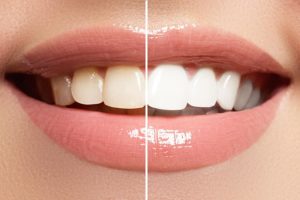
Patient Success Photos: Before and After
Below are photos of patients’ smile lines before and after porcelain veneers:
Maintenance of Porcelain Veneers
The best way to increase the longevity of the veneer is to properly take care of them. The easiest way to do this is with excellent oral hygiene. Not only will it make the veneer last much longer but it will also prevent cavities and gum disease.
Another way to maintain the veneer is to avoid chewing hard foods like ice. This is to prevent cracking or chipping of the veneer. Any food that is hard or sticky (think caramel) should be avoided.
It is best to form the habit of chewing with the back teeth versus the front teeth to lessen the chance of damaging the veneer and if you grind your teeth at night, dentists recommend using a nightguard for added protection.
Porcelain Crowns at East Valley Dental Professionals
At East Valley Dental Professionals, we are dedicated to working with families and developing long-term relationships with our patients.
If you are uncertain of a procedure that was recommended for you, we offer free second opinions with no strings attached. Contact our team of professionals at (480) 838 – 3033 to schedule an appointment today!
The post Porcelain Veneers Before and After appeared first on East Valley Dental Professionals.
]]>Are you less than happy with the smile that looks back at you when you glance in the mirror? There are many ways to fix this predicament. Perhaps you’ve felt this way for years, but you’re just now ready to do something about it. But, after a quick google search, you may have found that […]
The post Which Should You Choose: Veneers Vs Lumineers? appeared first on East Valley Dental Professionals.
]]>Are you less than happy with the smile that looks back at you when you glance in the mirror? There are many ways to fix this predicament. Perhaps you’ve felt this way for years, but you’re just now ready to do something about it. But, after a quick google search, you may have found that there are so many different options for restorative work that it’s tough to know which approach is best for your situation.
The best way to decide which cosmetic dentistry solution is best for the type of work you need is to have a conversation with a trusted dentist. But it is always wise to go into a conversation with at least a little bit of knowledge and information, so we are here to help you understand the pros and cons and basics of the differences between dental veneers and Lumineers.
Who Needs Veneers?
To begin to understand the difference between these two, it is best to decide if this is the type of restorative dental work that you need. When you have discolored, broken, or chipped teeth, you can become self-conscious about your smile. To fix this, dental professionals have developed methods for restoring your smile to its perfect condition without having to remove healthy teeth. That is where veneers come in.
If you are unhappy with your current smile because you are missing teeth or have severely damaged teeth, veneers are not the proper solution for you. Your dentist may recommend a crown or implant for you to protect damaged teeth and gums.
What are Veneers?
Veneers are a cosmetic solution to discolored teeth, stained teeth, chipped teeth, or gaps between teeth that are otherwise healthy. They are made by placing a thin cap in front of healthy teeth and securely bonding them in place. They do not cover the entirety of the tooth as a crown does and therefore do not strengthen or protect the tooth, they only improve the look of the natural tooth. Traditionally, veneers can be made of porcelain or composite resin.
To ensure a snug and correct fit, dentists must prep veneers by shaving the tooth enamel of the natural teeth down so that the veneers are not too bulky. Therefore, veneers are a permanent solution and cannot be reversed. They typically cost between $900-$2500 per tooth and can last 20 years if they are properly cared for.
Those who wish to see a perfectly straight and bright smile staring back at them often opt for veneers.
What are Lumineers?
Lumineers are not a type of cosmetic dentistry on their own but are a brand type of veneer. Lumineers are exclusively fabricated by DenMat Labs as a veneer that requires less preparation. Lumineers are made of an ultra thin porcelain material and are directly bonded to your teeth without shaving them down, therefore, they are sometimes referred to as no-prep veneers. Because of the thin material and lack of prep, they are considered less permanent than traditional porcelain veneers. But this also allows them to be reversible if you change your mind in the future.
Because Lumineers require less prep work, they are often less expensive than their permanent counterparts, but they also do not tend to last as long, with a life of about 10 years. For those on a budget or for those with teeth that are not severely discolored, Lumineers are an excellent cosmetic option. Not all dentists provide Lumineers, but they may have another ultra-thin veneer option available.
Looking for a Dentist’s Opinion?
When debating whether you should go with traditional Veneers vs. Lumineers, it is best to consult with a dentist that you trust will be honest with you and will keep your best interest in mind. A dental professional is the best person to answer these questions because they can assess the shape and condition of your smile, your lifestyle, and your other dental needs and answer all of your questions.
At East Valley Dental Professionals, we provide many different services for perfecting your smile. We are available to apply Veneers and Lumineers, or we may be able to find a straightening or whitening solution for you if that is a better fit.
In any case, our patients are our priority, and we are happy to answer all of your questions and even offer second opinions at no cost to you. Call us today if you are ready to chat about your smile.
The post Which Should You Choose: Veneers Vs Lumineers? appeared first on East Valley Dental Professionals.
]]>Has your smile changed over the years? Or perhaps you have always been unhappy with your smile, so you’ve learned the trick of smiling with a closed-mouth smirk? In either case, you don’t have to live with a smile that you aren’t proud to show off. Dental veneers are an invention in cosmetic dentistry that […]
The post How Long Do Veneers Last? appeared first on East Valley Dental Professionals.
]]>Has your smile changed over the years? Or perhaps you have always been unhappy with your smile, so you’ve learned the trick of smiling with a closed-mouth smirk? In either case, you don’t have to live with a smile that you aren’t proud to show off.
Dental veneers are an invention in cosmetic dentistry that gives your natural teeth a boost when they are discolored, chipped, or disproportionate.
What Are Veneers?
Veneers are thin shells of tooth-like material that are attached to the front of a natural tooth. They differ from tooth crowns in that they are not intended to strengthen weakened teeth but are used as a covering for teeth with visual imperfections. Therefore, they are a cosmetic solution, not an oral health solution.
If you have a tooth or teeth that bother you because they are discolored, chipped, or too big or small for your mouth, veneers may be a solution for you. Continue reading to learn more about
Do Veneers Need to Be Replaced?
Are you wondering if veneers are a permanent solution? The answer depends on what they are made of and how you treat them with your dental hygiene practices.
Most dental professionals prefer to use porcelain veneers because they are made of a translucent thin layer of glass that closely mimics natural teeth. They are the material that is most easily blended with your natural smile. These typically last at least 10 years, sometimes even up to 20 years. Though, these are the most expensive option.
If you are looking for a more budget-friendly option, composite veneers are your next best choice when it comes to veneer material. These are made of a composite resin with porcelain. They are a bit bulkier than full porcelain but still blend well with your natural smile. They are a less expensive option with an average lifespan of 5-10 years.
But, no matter the material you choose, the level of care you give your veneers will ultimately determine their longevity.
How to Help Your Veneers Last Longer
Veneers of any material will last longer and need fewer replacements if you take care of them properly. Implementing good oral hygiene practices will not only prevent gum disease and cavities but will also keep your veneers in excellent shape.
Do you grind your teeth at night? If so, wearing a mouthguard is the best way to prevent your veneers from cracking or wearing thin. Additionally, you should avoid chewing hard or sticky foods such as ice and caramel or toffee-coated candies. Another way to avoid early replacement of your veneers is to avoid using your teeth to open bottles, untie knots, or rip off tags.
Veneers at EVDP
Are you interested in giving your smile an upgrade with veneers? At East Valley Dental Professionals, we specialize in “smile makeovers.” If you are unhappy with your smile, schedule a visit with us. We can discuss if you are a candidate for veneers. We also have many other procedures available in the cosmetic dentistry realm, such as porcelain crowns, teeth whitening, dental bonding, and more.
Don’t suffer through your life with a smile you don’t love, call us today.
The post How Long Do Veneers Last? appeared first on East Valley Dental Professionals.
]]>According to the American College of Prosthodontists, approximately 120 million Americans are missing at least one tooth. Many more Americans have some sort of damage or decay in their teeth. Two of the most common treatments for these types of defects include crowns and veneers. Veneers and crowns are both permanent dental restoration techniques used […]
The post Dental Crowns vs Veneers appeared first on East Valley Dental Professionals.
]]>According to the American College of Prosthodontists, approximately 120 million Americans are missing at least one tooth. Many more Americans have some sort of damage or decay in their teeth. Two of the most common treatments for these types of defects include crowns and veneers.
Veneers and crowns are both permanent dental restoration techniques used in a variety of different situations ranging from structural reinforcement to cosmetic changes. While both options allow you to retain your existing tooth, there are several key differences between the procedures which influence which is the right choice for your needs.
What is a Crown?
A crown can be described as a cap that covers a tooth or implant. They are typically around two millimeters thick. They may be composed of porcelain, metal, and other blends of material. The dentist may need to extract the decaying part of a tooth. Depending on the size and condition of the tooth, the dentist may need to “build up” or “grind down” the tooth to allow for proper placement.
When you have extensive tooth decay or have undergone a root canal, crowns help save the original tooth while making it more durable than before. This type of added strength is commonly needed after these procedures as little of the original tooth remain after clearing the decay.
Crowns cover the entire tooth and are custom designed to fit correctly in the mouth. To ensure the prosthetic is the correct size and shape, your dentist will either take a mold or digital 3D image of your original tooth and make the crown in that shape.
Each crown is custom-made to the individual. As such, a temporary crown may be needed to allow for continued use of the tooth while you await your custom crown’s completion.
What is a Veneer?
A veneer is a thin layer that adheres to the front of an existing tooth. They are made from porcelain and other materials and are roughly one millimeter thick. They are commonly used to treat teeth that have become discolored, damaged or are improperly aligned. The majority of the original tooth may remain intact.
The enamel of the existing tooth typically must be filed down for proper adherence. The dentist either digitally scans your teeth or uses a model or mold. This is typically sent to a laboratory where the actual veneer is produced. You may be provided a temporary veneer in the interim. A special adhesive is applied and hardened using ultraviolet light to complete the process.
With veneers, the outermost facing layer of your tooth is ground down and replaced with a thin layer of porcelain. Similar to crowns, this layer is custom-made to match the shape and color of your teeth. Porcelain fuses to the exterior of your tooth through the use of UV lights, creating a permanent bond between the two surfaces.
As such, veneers fix a variety of cosmetic problems including crooked or chipped teeth, permanent yellowing, and misshapen or gapped teeth.
Costs of Crowns and Veneers
There are a host of variables that can impact the cost of crowns and veneers. These may include the size and position of the existing tooth. Prices tend to vary across different geographic regions. Whether dental insurance coverage applies can be a key factor in the amount of out-of-pocket expenses. The general price ranges are as follows:
• Composite veneers: $250 to $1,500 per tooth
• Porcelain veneers: Are more costly than composite veneers and may be up to $2,500 each
• Crowns: May range from $1,000 to $3,500 per tooth
The costs of crowns may vary based on the amount of preparation required. Often porcelain and ceramic crowns will exceed the overall cost of all-metal crowns.
Durability
Like anything in dentistry, the durability, health, and success of your procedure rely on proper care. Brushing and flossing twice a day are recommended, just as with natural teeth, and it is strongly advised to refrain from anything that could cause physical damage to the prosthetics.
Determining Whether to Use a Crown or Veneer
Teeth that have significant damage, a large filling or a root canal are best suited for a crown. Veneers tend to be preferred for more cosmetic applications. Most people find that veneers are more attractive than crowns. Unlike crowns, the underlying tooth is mostly intact. This makes those with veneers more susceptible to tooth decay.
Dental insurance is more likely to cover crowns compared to veneers. Composite veneers are generally affordable; however, they may need replacing within five to seven years. Most people find that crowns feel very natural. Some individuals experience sensitivity from crowns.
Importance of Choosing an Experienced Oral Health Professional
You are always encouraged to seek dental care from an experienced professional. Procedures involving crowns and veneers require skill to achieve the best outcomes. You should have a dental exam twice per year, which is an effective way to detect problems and prevent them from worsening. You should also remember that brushing after every meal and flossing daily is a fundamental way to protect your teeth.
Local Dentists in Mesa, AZ
While we like to be a source of information for anyone researching on the internet, East Valley Dental Professionals has made its home in Mesa, Arizona. Established in the 1980s, we take great pride in having local clients who receive the best dental care and the best service.
If you are in Arizona, don’t hesitate to give us a call at 480-838-3033 so you can speak to a professional who can help answer your questions or set up an appointment to get a consultation. We are only one call away from a healthier smile.
The post Dental Crowns vs Veneers appeared first on East Valley Dental Professionals.
]]>