If you’re not completely satisfied with the appearance of your teeth, you may have considered getting veneers. Veneers are a popular cosmetic dental treatment option for fixing various dental issues, such as chipped teeth, crooked teeth, gaps between teeth, and stained teeth. However, veneers may not be suitable for everyone due to their cost, invasiveness, […]
The post Best Alternatives to Veneers for Teeth appeared first on East Valley Dental Professionals.
]]>If you’re not completely satisfied with the appearance of your teeth, you may have considered getting veneers. Veneers are a popular cosmetic dental treatment option for fixing various dental issues, such as chipped teeth, crooked teeth, gaps between teeth, and stained teeth. However, veneers may not be suitable for everyone due to their cost, invasiveness, or other factors. In this article, we will explore the best alternatives to veneers that can help you achieve a beautiful smile without the need for extensive dental treatment.
What are veneers?
Dental veneers are thin shells made of porcelain or composite materials that are bonded to the front surface of your teeth. They are custom-made to match the color and shape of your natural teeth, providing a seamless and natural-looking result. Veneers can effectively cover dental imperfections and enhance the appearance of your smile.
Why look for alternatives?
While veneers can deliver impressive results, they may not be the right choice for everyone. Some people may have concerns about the invasiveness of the procedure, the cost, or the potential risks associated with altering the natural tooth structure. Therefore, it is important to explore alternative options that are less invasive, more affordable, or better suited to your specific dental needs.
Non-Invasive Options
Tooth Whitening
If your main concern is tooth discoloration or staining, tooth whitening may be a suitable alternative to veneers. This cosmetic dental treatment involves using bleaching agents to lighten the color of your teeth and remove stains. Tooth whitening can help you achieve a brighter and whiter smile, enhancing the overall appearance of your teeth.
Dental Bonding
Another non-invasive alternative to veneers is dental bonding. Dental bonding is a procedure in which a tooth-colored resin material is applied to your teeth and then hardened with a special light. This bonding material can effectively cover minor imperfections such as chips, cracks, or gaps, giving your teeth a more even and attractive appearance.
Veneers vs. Clear Aligners
When considering options for improving your smile, it’s important to know when to consider clear aligners and when to consider veneers, as each serves a specific purpose. Clear aligners, such as Invisalign, are the go-to choice when orthodontic correction is needed. If you have misaligned teeth, gaps, or bite issues, clear aligners can gradually and discreetly straighten your teeth, all while allowing for easy removal during meals and oral care routines.
However, it’s important to note that veneers involve a minor removal of enamel and are a non-reversible procedure. Ultimately, the choice between clear aligners and veneers depends on your specific dental needs and goals, with some individuals even opting for a combination of both to achieve a complete smile makeover. To make an informed decision, consult with a dentist or orthodontist who can assess your unique circumstances and guide you toward the most suitable solution for your smile.
Dental Crowns as an Alternative
What are dental crowns?
Dental crowns, also known as caps, are tooth-shaped coverings that are placed over damaged or heavily filled teeth. They can be made of porcelain, metal, or a combination of both. Dental crowns are used to restore the shape, strength, and appearance of your teeth, providing a natural and aesthetically pleasing result.
Comparison between veneers and dental crowns
While both veneers and dental crowns can improve the appearance of your teeth, they are used for different purposes. Veneers are mainly used to enhance the aesthetics of your smile by covering the front surface of your teeth. On the other hand, dental crowns are used to restore and protect heavily damaged or weakened teeth. Therefore, if your teeth require significant structural support in addition to cosmetic improvement, dental crowns may be a suitable alternative to veneers.
Veneer Considerations
Composite Veneers
If cost is a major consideration for you, composite veneers can be a more affordable alternative to porcelain veneers. Composite veneers are made of a tooth-colored resin material that is directly applied and shaped on your teeth. While composite veneers may be less durable than porcelain veneers, they can still effectively improve the appearance of your teeth at a more affordable price point.
Porcelain Veneers vs. Composite Veneers
When comparing porcelain veneers and composite veneers, it’s important to consider the factors of durability and longevity. Porcelain veneers are known to be more durable and resistant to staining than composite veneers. However, composite veneers can be a temporary or more budget-friendly option, especially if you are looking for a cosmetic improvement for a shorter period of time.
Affordable alternatives to veneers
In addition to composite veneers, there are other affordable alternatives to veneers that you can explore. One such option is enamel shaping, which involves contouring and reshaping your natural teeth to improve their appearance. Dental contouring can effectively address minor issues, such as uneven teeth or small chips, without the need for extensive dental treatment.
Taking Care of Your Teeth without Veneers
Good oral hygiene practices
Regardless of whether you have veneers or not, maintaining good oral hygiene practices is essential for keeping your teeth healthy and beautiful. Brush your teeth at least twice a day, floss daily, and use mouthwash to remove plaque and prevent tooth decay. Good oral hygiene can help preserve the health of your natural teeth and reduce the need for extensive dental treatments.
Regular dental check-ups
Regular visits to your dentist are crucial for maintaining the health of your teeth and identifying any potential dental issues early on. Your dentist can provide professional cleanings, check for signs of tooth decay or gum disease, and offer guidance on how to best care for your teeth. By staying proactive with your dental care, you can minimize the need for cosmetic treatments such as veneers.
Consulting an experienced cosmetic dentist near you
For personalized guidance on the best solution to enhance your smile, we invite you to seek a professional opinion at East Valley Dental Professionals, located in Mesa, Arizona, and serving Mesa, Tempe, Chandler, and Gilbert. Dr. Nathan Smith and his experienced team are committed to providing comprehensive dental care and will help you make an informed decision about whether clear aligners or veneers are the right choice for your unique dental needs. Your journey to a brighter, more confident smile begins with a consultation at East Valley Dental Professionals, where expert care meets exceptional results.
The post Best Alternatives to Veneers for Teeth appeared first on East Valley Dental Professionals.
]]>In America, there are over 15 million people who have dental crowns to strengthen their teeth and 5.5 million people who have dental implants. These numbers are on the rise because these procedures are becoming more common. If you have a damaged tooth, you may be considering your dental options. Understanding the differences between crowns […]
The post Dental Implants vs Crowns: What are the Differences? appeared first on East Valley Dental Professionals.
]]>In America, there are over 15 million people who have dental crowns to strengthen their teeth and 5.5 million people who have dental implants. These numbers are on the rise because these procedures are becoming more common.
If you have a damaged tooth, you may be considering your dental options. Understanding the differences between crowns vs implants can seem overwhelming. This article looks at both procedures including the pros and cons of each.
What are Dental Implants?
Dental implants are the permanent installation of artificial teeth. This can be a single tooth or multiple teeth. These implants are surgically placed in your jawbone. The implant is a titanium post that will merge with the jawbone to set the implant so it will not move, make noise, or cause bone damage.
The materials used are significantly stronger which causes them to easily last twenty-plus years with proper dental care. Implants are not prone to tooth decay which drastically improves their lifespan. This dental procedure takes months to complete because the mouth must heal before an impression can be made for the artificial tooth/teeth.
If a tooth needs to be replaced, the process is much simpler since the titanium posts are already in place. An impression of the tooth would be made and once the permanent was created it would be slid onto the previously implanted post.
Dental implants are used to improve the overall appearance of the smile and to restore the patient’s ability to chew. They can also provide support for other artificial teeth such as crowns, bridges, or dentures.
Pros of Dental Implants
- Restores Ability to Chew
- Improves Dental Appearance
- Easy Tooth Replacement
- Improves Health of Surrounding Bone and Gums
Cons of Dental Implants
- Requires Surgery
- Most Dental Insurance Won’t Cover Them
- Typically Expensive
- Requires 3-6 Months of Healing Between Appointments
What is a Dental Crown?
A dental crown is a prosthetic device that is placed over the top of a damaged, decaying, or broken tooth. A crown is a cap that covers the natural tooth. They are used to protect a weak tooth from further damage, breakage, or falling out.
Dental crowns are sometimes referred to as dental caps and can be used over a tooth that has had root canal treatment or other restorative work. If the patient has excellent oral health, dental crowns typically last a minimum of 15 years!
Pros of a Dental Crown
- Simple, In-Office Procedure
- Relieves Pain and Discomfort
- Protects Natural Teeth from Further Damage
- Restores Patient’s Smile Quickly
Cons of a Dental Crown
- Costly (Depends on Dental Insurance)
- Short Term Sensitivity
- May Need Replacing
- Can Become Loose or Fall Out
East Valley Dental Professionals Can Help
Deciding on either a crown or dental implant can be challenging for various reasons. At East Valley Dental Professionals, we are dedicated to working with families and developing long-term relationships with our patients.
If you are uncertain of a procedure that was recommended for you, we offer free second opinions with no strings attached. Contact our team of professionals at (480) 838 – 3033 to schedule an appointment today!
The post Dental Implants vs Crowns: What are the Differences? appeared first on East Valley Dental Professionals.
]]>Oftentimes, patients will request that their dental crowns and dental implants be as white as possible because teeth whitening has become a popular trend. The problem with this trend is that natural teeth are darker than most people realize. One thing to consider is what material your crown will be made from such as metal, […]
The post Color Options for Dental Crowns: Choosing the Right Shade appeared first on East Valley Dental Professionals.
]]>Oftentimes, patients will request that their dental crowns and dental implants be as white as possible because teeth whitening has become a popular trend. The problem with this trend is that natural teeth are darker than most people realize.
One thing to consider is what material your crown will be made from such as metal, resin, ceramic, or porcelain fused to metal. Metal crowns alone are not able to match the surrounding teeth, however, porcelain fused to metal crowns can closely color match. Ceramic and porcelain crowns are the best at color-matching natural teeth.
If your crown or implant can not be pearly white, then what color should it be?
What Color Are Dental Crowns?
Dental professionals refer to teeth having shades instead of one particular color because there are four shade combinations to choose from:
- Red/Brown
- Red/Yellow
- Grey
- Red/Grey
The goal is to keep the shade as close to your existing teeth as possible. Selecting a shade is far more important on the front teeth than the back teeth because if the shade is off on the front teeth it will be obvious.
How to Choose the Right Shade?
When selecting a dental implant/crown color there are a variety of shades. Natural teeth can vary in color, especially if you are experiencing any type of damage such as tooth decay.
If you are selecting a shade for one dental crown that is covering a root canal the selection process is a little different. You will want your dentist to suggest a color that matches the color of your surrounding teeth.
It is important to keep in mind skin tone, hair color, and even eye color when selecting from the shade guide. It is easier to select a particular shade with dental implants because all of the teeth will be made in the same shade.
Using a Shade Guide
If you are worried about selecting the perfect color for your crown, keep in mind that your dentist is an experienced professional. They do this procedure often and know what to look for in office lighting. Chances are very high that whatever color they choose you will not be able to tell which tooth has a crown and which teeth are natural!
Dentistry is a perfect blend of science and art. During the first visit of the crown procedure, the dentist will use a shade guide to help choose the perfect color. A shade guide is typically a plastic card that has fake porcelain teeth of various shades arranged in order from light to dark. They will ask you to smile and do their best to choose a shade from the guide that represents the majority of your natural teeth.
The dentist will show you the color they believe is the best match and will confirm that you agree. If you have a different shade in mind, make sure you speak with the dentist immediately. Once a shade is selected, the impression and color choice are sent to the lab to create your permanent crown. Shade guides are incredibly helpful and allow both the patient and dentist to confidently select the perfect color.
Dental Crowns and the East Valley Dental Professionals
At East Valley Dental Professionals, we are dedicated to working with families and developing long-term relationships with our patients. If you are uncertain of a procedure that was recommended for you, we offer free second opinions with no strings attached. Contact our team of professionals at (480) 838 – 3033 to schedule an appointment today!
The post Color Options for Dental Crowns: Choosing the Right Shade appeared first on East Valley Dental Professionals.
]]>Dental crowns are most commonly used to protect a weak tooth, restore a broken tooth, or hold a dental bridge in place. They can be made of various materials such as metal, ceramic, or porcelain. If properly cared for, a dental crown can have a lifespan of 25-30 years! The most common reasons that a […]
The post Loose Dental Crowns and Temporary Solutions appeared first on East Valley Dental Professionals.
]]>Dental crowns are most commonly used to protect a weak tooth, restore a broken tooth, or hold a dental bridge in place. They can be made of various materials such as metal, ceramic, or porcelain. If properly cared for, a dental crown can have a lifespan of 25-30 years!
The most common reasons that a crown would need to be replaced is if it is chipped, falls out, or if biting down brings tooth sensitivity. There are times that the crown may become loose but not fall out. Continue reading to learn what to do if you are dealing with a loose crown.
Why is my Crown Loose?
Listed below are the most common reasons that a crown will become loose.
Teeth Grinding
The act of repetitive clenching or grinding of the teeth will cause the crown to crack or become loose. This is because of the pressure that is regularly being applied to the tooth.
Tooth Decay
Tooth decay is due to a lack of proper oral hygiene. When there is tooth decay present, it can change the structure of the tooth resulting in the crown becoming loose.
Mouth Trauma
Any form of trauma can cause a crown to become loose. The most common example is sporting injuries. The crown’s adhesive can become weakened with impact.
Consuming Certain Foods
Although dental adhesive is very effective at keeping crowns in place, certain foods should be avoided. Any type of sticky food such as caramels, taffy, and chewing gum. These foods can loosen or even pull out the crown.
Dental Adhesive Issues
When the dentist places the temporary crown they will use temporary dental cement. This cement is not meant to last forever. If you still have a temporary crown, it may become loose due to the temporary cement.
Seldomly, there can be an issue with the permanent cement that dentists use when placing the permanent crown. If the crown becomes lose it is usually due to one of the causes listed above.
Treatment of a Loose Crown
You’ve noticed that your permanent dental crown is loose; what should you do now? The first step is to make an appointment with your dentist. At your dental appointment, they will be able to confirm that the tooth and crown are still in good shape. If there is decay present, they will need to discuss treatment options.
In the meantime, you need to see how loose the crown is. Pinch the crown and gently attempt to remove it on your own. It is important to do this because you need to avoid ingesting the crown at all costs. If it wiggles free easily, make sure to put it in a safe place until your dental appointment.
If it does come out, brush your natural tooth gently with a toothbrush to remove any debris or cement. It is recommended to consume food and drinks that are sugar-free since the natural tooth is exposed and is more susceptible to decay.
If it does not wiggle free easily – leave it alone! During meals make sure you eat with the opposite side of your mouth. Any type of continual disturbance can damage the inside of the crown. If this happens a new crown will need to be molded.
If the crown has come out and you are experiencing sensitivity there is the option of using an over-the-counter dental adhesive that you can find at most pharmacies and grocery stores. This is an extremely temporary solution until you can meet with your dentist for further assistance.
Preventing Crown Issues
The best way to prevent dental crown issues is to be proactive in oral hygiene. It is imperative to brush twice a day, floss after each meal, and use an antiseptic mouthwash to prevent tooth decay.
The mouth is full of bacteria that can cause decay, gingivitis, and cavities. Practicing good oral hygiene ensures that bacteria and plaque can not build up around the crown causing further issues.
If you have dental crowns it is even more important to maintain regular dental care visits. Routine visits, such as regular cleanings, can prevent future dental emergencies. During routine cleanings, the hygienist will be able to assess your gum line and ensure there are no teeth that need immediate attention.
Dental Crowns and the East Valley Dental Professionals
At East Valley Dental Professionals, we are dedicated to working with families and developing long-term relationships with our patients. If you are experiencing issues with a dental crown we offer free second opinions with no strings attached. Schedule an appointment with us to begin improving your dental health today!
The post Loose Dental Crowns and Temporary Solutions appeared first on East Valley Dental Professionals.
]]>Have you ever glanced over to smile at a stranger, and the smile you see back is glaringly white and perfect? Like, a bit too perfect? In instances like these, it’s obvious that someone has had dental work done. And while it may look nice, the goal of cosmetic or restorative dentistry is to appear […]
The post Crown Shade Guide: Best Color for Dental Crowns appeared first on East Valley Dental Professionals.
]]>Have you ever glanced over to smile at a stranger, and the smile you see back is glaringly white and perfect? Like, a bit too perfect? In instances like these, it’s obvious that someone has had dental work done. And while it may look nice, the goal of cosmetic or restorative dentistry is to appear as if you have not had any work done. If the dental work is not subtle, then it’s almost as obvious as having a metal crown in the middle of your smile. Therefore, if you have ever seen a “too-perfect smile,” you know it is crucial to select a dentist that takes time and effort to make your dental crowns appear as similar to your natural teeth as possible.
When choosing the right shade of a new tooth crown or dental implant, color science is not the only important factor. The best dentists will consider the art and skills necessary to select the right color match that appears as natural as possible next to your surrounding teeth. If you have upcoming dental work scheduled and are concerned about a natural tooth color, continue reading to learn more about how to choose a crown shade.
Factors That Affect Shade Selection:
We’re sure you’ve heard the phrase “pearly whites.” But did you know that teeth are not actually “white?” Tooth color ranges from pink to blue, to brown, to yellow and gray hues. Therefore, selecting the right shade for your dental crown depends on several factors.
Natural Shade
When matching your tooth shade, your dentist will consider the color of your natural teeth. Different teeth have different functions and, therefore, different thicknesses. For instance, canine teeth have thicker layers than your front teeth because they are used for ripping and tearing. The build-up of these layers may be visibly more yellow than the teeth next to them. Therefore, your dentist will take the tooth placement into account before selecting a shade.
Age
Even if you keep your teeth in amazing shape, teeth that have existed for a lifetime will show some wear and discoloration. Therefore, as a senior, if you show up to a family function with new white teeth in an unnaturally bright shade, it may not seem fitting. Your dentist can select a shade that is a tad darker that will blend well and allow you to continue to show off your beautiful smile without drawing negative attention.
Environment
Are you a big coffee, tea, or wine drinker? If so, your teeth may be a bit stained, even if you brush and floss regularly. Therefore, it would not be wise to pop in a stark white tooth next to natural teeth that have a bit of staining.
Some dentists will recommend that you have your teeth whitened before selecting your color shade so that they can match your new tooth to the bleach shade. But it is important to note that most materials used for dental crowns will not stain, therefore, even if your teeth are whitened before color matching, if you continue to drink staining liquids, your natural teeth will stain, but the crown will not, and can become more evident over time.
Process of Shade Selection:
To begin the process of color shade selection, your dentist will hold up a shade tab next to your teeth to see what each color looks like next to your smile. There are many popular brands of shade tabs, such as Vita Shades, Vita Classical, and Chroma. Your dentist will be familiar with their chosen brand.
It is important to do a shade match in a dental lab that mimics natural light conditions and to avoid environmental factors such as bright lipstick, bright-colored clothing, shadowed light, etc. The naked eye perceives colors differently under different conditions. Therefore to receive the best results, your dentist will ensure these factors are not an issue.
Discussing Shade with Your Dentist
At East Valley Dental Professionals, we desire to give you the most beautiful and natural smile possible. Our team is available to explain our color-matching strategy and address all of your concerns before your procedures are scheduled. If you’re ready to achieve a perfectly-matched smile, give us a call today.
The post Crown Shade Guide: Best Color for Dental Crowns appeared first on East Valley Dental Professionals.
]]>When you drive through your city, does it seem that there is a dental office on every corner? This is because taking care of your teeth is an extremely important part of your health to prevent gum disease, heart-related issues, and more. Additionally, a beautiful smile can bring confidence and joy to your life. But […]
The post How Common Are Dental Crowns? appeared first on East Valley Dental Professionals.
]]>When you drive through your city, does it seem that there is a dental office on every corner? This is because taking care of your teeth is an extremely important part of your health to prevent gum disease, heart-related issues, and more. Additionally, a beautiful smile can bring confidence and joy to your life.
But what happens when you have a tooth that is discolored, damaged, or decaying? Pulling the tooth is not typically the first line of defense. A knowledgeable dentist will first attempt to save the tooth by placing a dental crown.
If you have a tooth that you are concerned about and believe a dental crown could help, continue reading before visiting your dentist to learn more about how they work and how often this method is used in dental care.
What Are Dental Crowns?
A dental crown is a prosthetic device that is placed over the top of a damaged, decaying or broken tooth. They are used to protect a weak tooth from further damage, breakage, or falling out. Dental crowns are also sometimes referred to as dental caps and can be used over a tooth that has had root canal treatment or other restorative work. Depending on the type of material you use, a dental crown feels and looks like a natural tooth, and in many cases, you would never know that you have had dental work done.
What Are Dental Crowns Made Of?
Dental crowns can be made from various materials. The type of crown you get depends on your dentist’s preferences, location in your mouth, potential allergies, permanence, and price. For instance, metal crowns are very durable and cost-effective but are only used for molars or teeth in the back of your mouth because their coloring is metal and, therefore, unsightly if used on a tooth in the front. Stainless steel is often used as a temporary crown or for children’s baby teeth.
Porcelain fused to metal is also a cost-effective option that mimics the look of a natural tooth, but this porcelain is prone to chipping therefore, it may not be a permanent option. If you are looking for a permanent crown with the lowest potential of replacement, a ceramic or all-porcelain crown is often the best choice. This option is also the most expensive, but your dental insurance company may pay for some portion of the cost.
How Long Do Dental Crowns Last?
As mentioned above, the type of material used for a dental crown can highly affect the permanence of the crown. But, in many cases, crowns that are placed and appropriately cemented can sometimes last for 15 years to a lifetime. In most cases, the permanency depends on the location and type of use the crown sees. For example, rough use, such as chewing hard candies or ice, is the most common reason crowns fall out. Therefore, if you take special care of your dental crown, it is likely to last you a long time.
So, How Common Are Dental Crowns?
You may be surprised to know that dental crowns are very commonly used. In America, over 15 million people have dental crowns to strengthen their teeth. Therefore, the likelihood of you knowing someone with a dental crown is very high.
Are you in need of a dental crown? Don’t put off taking care of your dental health. Call East Valley Dental Professionals to schedule an appointment today.
The post How Common Are Dental Crowns? appeared first on East Valley Dental Professionals.
]]>Emergency dental visits are something that most of us dread having to endure. But if you’re dealing with a damaged tooth that is causing you significant pain, then it’s important to make an appointment with your dentist’s office right away to evaluate any potential treatment options. One of the best ways to address these types […]
The post Same Day Dental Crowns: When To Get One & How It Works appeared first on East Valley Dental Professionals.
]]>Emergency dental visits are something that most of us dread having to endure. But if you’re dealing with a damaged tooth that is causing you significant pain, then it’s important to make an appointment with your dentist’s office right away to evaluate any potential treatment options.
One of the best ways to address these types of issues is by using same-day dental crowns. Unlike traditional crowns that require multiple appointments, same-day crowns can give you immediate relief from your symptoms and help prevent additional damage to your smile.
Here’s everything you need to know…
Why Would I Need A Dental Crown?
Dental crowns are used to cover a variety of oral health issues, including cracked teeth and covering complex procedures like a root canal or dental implant. And just like with traditional crowns, a same-day crown can be used to address any of these concerns in a fraction of the time.
That means that if you’re in urgent need or repairing a damaged tooth, then same-day dental crowns could be your best option for rapid relief.
Same Day Crowns Vs. Traditional Crowns: What’s The Difference?
While they can be used to treat the same dental health issues, there are a few major differences between same-day dental crowns and traditional crowns that you should be aware of.
The biggest difference is that same-day crowns are made using CEREC technology, which allows your dentist to create your crown on-site at the same time as your appointment. This is opposed to standard crowns, which are often made in a lab and can take several days to be ready.
Here are some other key differences to consider…
Same Day Dental Crowns
- Made from ceramic using CEREC technology, although may be less durable than traditional crowns
- Crowns can be designed using digital impressions for a less invasive experience
- Can be made and installed in just one appointment using computer-aided design
Traditional Dental Crowns
- Made from using porcelain-fused-to-metal crowns which match the natural tooth and are considered highly durable
- May require clay tooth impressions to create an accurate design
- Crown creation process can take several days, and you may need a temporary cover before your permanent crown is ready
- Multiple appointments will likely be necessary
How Are Same Day Dental Crowns Made?
Despite being made using computer-aided design, the process for getting a same-day crown isn’t drastically different than the traditional procedure.
First, your dentist will need to assess the damage to your natural tooth, so that they can create a crown that properly addresses your needs. During this step, you’ll need to provide an accurate impression of your teeth. This can be done easily using digital impressions.
While your crown is being created, your dentist will start preparing your tooth. To do this, they may need to file down the existing tooth so that your crown can fit snuggly on top of it. You might need a small amount of local anesthesia to ensure that this step is as pain-free as possible.
Lastly, your dentist will install your same-day crown. This part of the process is done using a heavy-duty sealant that holds the crown in place and shouldn’t take more than an hour.
What Are The Benefits Of Choosing Same Day Dental Crowns?
Ultimately, deciding between same-day dental crowns and traditional fused-to-metal crowns is an important conversation that should be had between you and your dental care provider.
But with that being said, there are some major benefits to choosing a same-day crown that you should know about before visiting your dentist office.
The most appealing benefits are…
Rapid Relief
Tooth pain is something no one should have to deal with. With a same-day crown, you can alleviate the symptoms of a damaged tooth in just one session. So, you can get back to enjoying your smile.
Less Discomfort
Thanks to the advanced CEREC technology used in same-day crowns, this option requires fewer invasive preparation measures. That means your crowing process will be as pain-free as possible.
No Waiting Time
Since you’ll be receiving your permanent crown during the same appointment, there’s no need to spend time waiting around with a temporary cover. You can get in, get out, and completely repair your smile all in one day.
Natural Appearance
Because CEREC technology is used to create ceramic crowns, your repaired tooth is more likely to match the appearance of the surrounding teeth. This makes it easy to discreetly cover any issues in your smile, with no obvious signs of dental work required.
Where To Get A Same Day Crown?
Choosing which type of dental crown is best for you is an important decision.
And at EVDP, we’re here to help. We’ve been providing comprehensive dental solutions to patients across Mesa, Arizona since the early 1980s, and offer the latest advancements in dental technology to make your same-day dental crowns as fast and stress-free as possible.
Learn more about same-day dental crowns by contacting our office at (430) 838-3033.
The post Same Day Dental Crowns: When To Get One & How It Works appeared first on East Valley Dental Professionals.
]]>Having a damaged smile isn’t just detrimental to your dental health. It can wreak havoc on your self-esteem and prevent you from fully enjoying all of the things in life that light you up. If this sounds familiar then you don’t have to suffer with an unattractive tooth structure any longer. Modern cosmetic dentistry has […]
The post How A Dental Crown On Front Teeth Can Repair And Restore Your Smile appeared first on East Valley Dental Professionals.
]]>Having a damaged smile isn’t just detrimental to your dental health. It can wreak havoc on your self-esteem and prevent you from fully enjoying all of the things in life that light you up.
If this sounds familiar then you don’t have to suffer with an unattractive tooth structure any longer.
Modern cosmetic dentistry has made it possible to completely restore and renew damaged teeth using dental crowns, which can cover a damaged tooth and prevent further decay along the surrounding teeth.
More specifically, a dental crown on front teeth can even correct a cracked or chipped tooth without the need for implants or other invasive procedures
Today, we’re going to be taking a look at how front dental crowns work and what you can expect when getting one, so that you can choose a smile-worthy solution that works for you.
Why Would You Need A Front Tooth Crown?
Many types of dental crowns can be used to repair various different issues with your teeth, which are not always due to severe tooth decay. In fact, there are many instances that could cause you to need a front tooth crown, even when you practice good dental hygiene.
The most common reasons for needing a front tooth crown include…
- Protection for teeth that have become weak due to cavities
- Covering a tooth that’s been damaged from an accident or facial injury
- Supporting dental bridges between teeth
- Hiding teeth that have become discolored or misshapen
- Covering major dental procedures like implants or a root canal
If you’ve encountered any of these situations, then a front tooth crown may be the solution your smile has been waiting for.
What Types Of Crowns Are Used?
While there are a variety of crowns that can be used in cosmetic dentistry, most front teeth repairs are done using a Porcelain-Fused-To-Metal crown or PFM crowns for short. These crowns are made by taking a traditional metal crown and covering it with a coat of sleek porcelain, creating an aesthetically pleasing appearance that’s made to last.
Some of the benefits of using PFM crowns include…
Natural Looking Appearance
One of the biggest reasons why PFM is preferable for covering front teeth is that this type of porcelain can be made to match the color of your natural teeth, so you can repair a damaged tooth without creating an obvious disruption in your smile. To put it simply, PFM crowns are the best tooth-colored option for correcting damaged teeth that are highly visible
Low-Maintenance Aftercare
Many dental procedures come with complex special care instructions that make maintaining your new smile feel like a chore. But PFM crowns are relatively low-maintenance and can last many years using the same dental hygiene practices that have already been recommended by your dentist, giving you the freedom to enjoy your smile without any added stress.
Lasting Durability
While all-porcelain crowns can provide many of these same benefits, PFM crowns come with the advantage of having a completely metal base, which can give you lasting durability and minimal risks of damage to your front tooth crown. This makes them a lasting solution for most types of visible tooth damage.
How Does The Front Tooth Crown Procedure Work?
Despite being a minimally invasive process, there are a few steps that your dentist will likely follow when preparing to apply a crown to your front tooth and to ensure that you get the results you deserve.
Step 1 – Initial Examination
First, your dentist will need to thoroughly examine that tooth that needs a crown. During this process, you may need to have x-rays or even a mold made of your tooth, so that you can get a crown that fits just right.
Step 2 – Tooth Preparation
Before your crown can be applied, your dentist will file down the damaged tooth, so that your crown can be placed securely on top of it without impacting the surrounding teeth. This process is painless and can often be done in less than an hour.
Step 3 – Crown Creation
Next, the dentist will need to have your crown made. If they have the resources to do this in-house, your crown can be created on the same day as your appointment. But if it needs to be sent out to be manufactured, your dentist will give you a temporary crown to keep your tooth safe until your final crown is ready.
Step 4 – Final Application
Finally, it will be time to secure your crown in place. This is done by cementing your crown onto the damaged tooth and allowing it plenty of time to adhere to the tooth. In most cases, this procedure can be done in between 2 – 4 hours, so you don’t have to spend all day in the dentist’s chair.
How To Get A Front Tooth Crown?
If you think that a front tooth crown might be right for you, you should visit your dentist to learn more about this procedure today.
At EVDP, we’ve been providing comprehensive dental solutions to patients across Mesa, Arizona since the early 1980s, and we proud are to be creating beautiful smiles for individuals of all backgrounds.
Our team is here to help you through every step of the dental crown process, so that you can achieve the smile of your dreams fast.
Experience the difference by contacting our office at (430) 838-3033.
The post How A Dental Crown On Front Teeth Can Repair And Restore Your Smile appeared first on East Valley Dental Professionals.
]]>In many cases, maintaining good oral hygiene means using dental appliances to repair and restore damaged teeth, preventing further tooth decay from negatively impacting your smile. However, these dental practices still come with their fair share of concerns and potential problems. If you’ve been considering getting a porcelain-fused-to-metal crown to treat a damaged or decaying […]
The post Top 5 Porcelain-Fused-To-Metal Crown Problems And How To Avoid Them appeared first on East Valley Dental Professionals.
]]>In many cases, maintaining good oral hygiene means using dental appliances to repair and restore damaged teeth, preventing further tooth decay from negatively impacting your smile.
However, these dental practices still come with their fair share of concerns and potential problems.
If you’ve been considering getting a porcelain-fused-to-metal crown to treat a damaged or decaying tooth, then this article will help understand the top problems that patients often have with these types of dental crowns, plus how you can avoid these complications altogether.
What Are Porcelain-Fused-To-Metal Crowns?
Porcelain-fused-to-metal, or PFM crowns, are a combination of metal dental crowns with a delicate layer of porcelain crown over top, designed to create a more natural-looking appearance.
Unlike traditional ceramic crowns, PFM crowns are often a more affordable treatment option, as well as being considered more durable than other types of crown materials.
And because they can be colored to match your natural tooth, PFM crowns are usually a top choice for repairing front teeth without giving a noticeable appearance.
What Problems Can Come With PFM Crowns?
While modern dental care can help you eliminate many of the risks associated with getting a dental crown, there are a few common problems you should speak with your dentist about before having a crown put in place.
Visible Metal Lines
Despite being tooth-colored, PFM crowns are still made with a foundation of noble metal.
And when not applied properly, these metal fragments can begin to show through the edges of your crown, creating a less-than-desirable appearance along your smile.
This often occurs when chewing forces the porcelain to deteriorate over time, especially if the crown wasn’t adequately applied in the first place.
Broken Or Chipped Crowns
Even though porcelain-fused-to-metal crowns are still considered to be more durable than many of their counterparts, you still run the risk of chipping or cracking your crown, which can cause dangerous tooth decay to continue underneath the surface of your crown.
Typically, damage to the exterior of your care can be attributed to not following oral hygiene instructions given to your by your dentist, like not brushing properly or consuming too many acidic foods and beverages.
And while PFM crowns cost less than other dental appliances, having a chipped crown repaired can be an expensive and often time-consuming process.
Bite Alignment Issues
Anytime that your dental crown has become broken or chipped, you don’t just have the appearance factor to worry about.
When this happens, it can also cause your natural bite to become misaligned, leading to severe side effects like headaches, difficulty chewing, and pain in the jaw area.
If you have a PFM crown and suspect that you may be clenching or grinding your teeth due to stress or another condition, you should contact your dental care provider to discuss preventative measures as soon as possible.
Receding Gum Line
Another potentially problematic result of having a porcelain-fused-to-metal crown is having your gum line become discolored and, in severe cases, receding backward.
Sometimes, this happens when the metal portion of the crown irritates the gum line, causing it to push back as time goes on.
But in other cases, a receding gum line can be an indication of another oral hygiene concern like gum disease, which can disrupt the appearance of your dental crown.
Allergic Reactions
Finally, most medical procedures involve the risk of an allergic reaction to the materials being used, and dental care is no different.
Even if you aren’t aware of having a metal allergy, the crowned tooth can still develop a sensitivity to these materials after being installed, which can cause serious complications for your overall health.
If you haven’t already, you should check with your doctor to rule out any potential allergic reactions before getting a crown or any other dental procedure.
How Can You Avoid Complications From A PFM Crown?
The easiest way to avoid porcelain-fused-to-metal crown problems is to work with a highly skilled dental care professional who takes the time to ensure that your crowns are properly applied, as well as offers you support for any additional maintenance your crowns may need.
The team at East Valley Dental Professionals is to help our patients receive high-quality care for all of their dental appliances, no matter what type of crown you need.
Learn more about how we can help you prevent dental crown complications by contacting our office at (430) 838-3033.
The post Top 5 Porcelain-Fused-To-Metal Crown Problems And How To Avoid Them appeared first on East Valley Dental Professionals.
]]>Taking care of your dental health is an essential part of maintaining a good quality of life and enhancing your overall well-being. But even if you keep up with your regular cleaning appointments, dental exams, and practice excellent dental hygiene at home, there’s still a chance you may need a dental crown to repair a […]
The post What Dental Insurance Covers Crowns? Here’s What You Need To Know appeared first on East Valley Dental Professionals.
]]>Taking care of your dental health is an essential part of maintaining a good quality of life and enhancing your overall well-being.
But even if you keep up with your regular cleaning appointments, dental exams, and practice excellent dental hygiene at home, there’s still a chance you may need a dental crown to repair a damaged tooth at some point in your life.
And despite being an important dental procedure for many patients each year, health insurance companies often fail to cover the cost of dental crowns, leaving the patient to foot a hefty bill.
Thankfully, there are a few ways to ensure that you get the insurance coverage you deserve, no matter what dental services you need.
What are Dental Crowns?
Dental crowns, also known as dental caps, are a type of permanent dental fixture that goes on over a cracked or otherwise damaged tooth or implant to prevent further destruction to that tooth and the ones around it.
While there are many different types of dental crowns, the most common materials used today are metal, porcelain, resin, or porcelain-fused-to-metal, which each offer their own unique set of advantages or disadvantages.
You may need a dental crown if you experience
- An old filling that has become loose
- Teeth that have been cracked or chipped due to injury
- Serious tooth decay resulting from a cavity
- Root canals that require additional tooth protection
- Cosmetic dental procedures that need to be discreetly covered
Whatever the case may be, you’ll need to speak with your dentist about your dental crown options, so that you can find the right solution to meet your needs.
Does insurance cover Dental Crowns?
In short, yes.
However, there are many stipulations that your insurance company may use to reduce the amount of coverage that can be applied towards your dental crown, driving up your out-of-pocket costs and potentially delaying your ability to get the dental care you deserve in a timely manner.
The most common hurdle that patients are faced with when applying for a dental crown is whether or not your insurance company considers the procedure to be medically necessary.
In other words, unless your cracked tooth is an immediate threat to your health, your insurance may be able to reject covering your dental procedure.
Here’s what you need to know before you ask your insurance company to cover your dental crown
Network Dentist
Just like with major health insurance, your insurance company will likely ask you to choose from their network of dentists before you can get your crown or any other dental procedures. This can provide a challenge for patients, since many dental offices have lengthy waitlists before accepting new clients.
If you’re unable to put off your dental crown, or you’d simply like to choose your own dentist, your dental insurance may not cover your expenses.
Annual Maximum
Whether you have private insurance, government-funded, or military coverage, most insurance companies include an annual maximum that can determine how much they’ll cover for all of your dental services each year. On average, the standard annual maximum in the United States is $1,500, which can make it a challenge to get the dental procedures you need without going over your limit.
If you require only basic care, then you probably won’t exceed your annual maximum. However, if you’re ever in need of additional procedures, you’ll likely have to cover the remaining costs yourself.
Coverage Types
Another important factor to consider is the different types of dental coverage that your plan will cover. Usually, there are 3 main types of coverage included in most dental insurance plans: Preventative, Basic, and Major Procedures.
Preventative care, which includes your regular cleaning appointments, X-rays, and sealants, covers 100% of the costs associated with these services, since they’re considered medically necessary for good dental health.
Basic care, which includes fillings, tooth extractions, and gum disease treatments, is usually covered up to 80% by your insurance company. While these dental services are important, many plans don’t deem them to be medically necessary.
Major care, which includes root canals, dentures, bridges, and crowns, is often covered only up to 50%. In many cases, your insurance company will consider these procedures to be “elective,” so they may not be included in your coverage.
Waiting Period
Finally, many insurance companies will require a waiting period before you can receive your crown or other dental procedures, especially if you are a new patient. This process can last anywhere from 12 months to 2 years, which can lead to further tooth decay if you aren’t able to get the care that you need.
How much do Dental Crowns cost?
While the cost of a dental crown may vary depending on the state you live, crowns typically range between $500 – $2,000 per tooth.
That means that if your plans offer only 50% coverage for a single crown, you could still be spending anywhere from a few hundred to several thousands of dollars on your procedure, depending on how many teeth need to be covered, the severity of the tooth damage and the type of crown your dentist decides to use.
What if I don’t have dental insurance?
Even with dental insurance coverage, you can still find yourself paying significant out-of-pocket costs for the sake of your dental health.
But thankfully, dental offices like East Valley Dental Professionals have developed a modern alternative to dental insurance that can save you and your family thousands of dollars each year on all types of dental services.
Our individual dental membership plans were designed to give our patients the dental care they deserve at an affordable cost, without jumping through all the hoops that most insurance companies require.
Here’s what our monthly dental memberships can do for you
Total Basic Care Coverage
When you sign up for your monthly plan, you gain immediate access to all of the basic dental care you need for a healthy, vibrant smile. Our plans include cleanings, fillings, x-rays, and exams at no additional cost each month, no matter how many visits you need to make.
Exclusive Procedure Discounts
Our goal is to ensure that no patients ever have to go without the critical care that they need. That’s why our plans offer significant discounts for major dental procedures that may not be covered by traditional insurance, including dental crowns and root canals, so you never have to put off repairing a damaged tooth.
No Maximums Or Deductibles
We guarantee that our patients pay a transparent monthly rate, with no annual maximums, long waiting periods, or costly deductibles required. As long as you choose our in-house dentists, we’ll make sure that you never have to deal with the hassle of insurance coverage again.
Ready to get the dental care you deserve?
At EVDP, we know that dealing with a surprise dental procedure can be a stressful experience, especially if your insurance company isn’t willing to help you cover the cost.
We’re committed to helping our patients receive high-quality care for all of their dental health needs, regardless of what their budget looks like.
Learn more about how our monthly dental memberships can help you transform your smile today by calling our office today at (430) 838-3033.
The post What Dental Insurance Covers Crowns? Here’s What You Need To Know appeared first on East Valley Dental Professionals.
]]>Even with the best oral hygiene routine, tooth decay and damage will likely happen to each of us over time. When this happens, dentists can use a number of methods to repair and restore damaged teeth, ranging from minimally invasive to full-scale dental implants. One of these methods, dental crowns, gives patients the chance to […]
The post Ceramic vs. Porcelain Crowns: Which Is Right For You? appeared first on East Valley Dental Professionals.
]]>Even with the best oral hygiene routine, tooth decay and damage will likely happen to each of us over time.
When this happens, dentists can use a number of methods to repair and restore damaged teeth, ranging from minimally invasive to full-scale dental implants.
One of these methods, dental crowns, gives patients the chance to avoid serious tooth decay, without the need for expensive maintenance or complicated aftercare.
What are dental crowns?
To put it simply, dental crowns are a type of coverage that your dentist can place over a damaged tooth to prevent it from worsening.
Typically made like a tooth-shaped cap, dental crowns help to strengthen the health of your smile and keep teeth in their natural alignment so that you can get back to living without the worry of long-term tooth decay.
Your dentist may recommend a dental crown to treat…
- Teeth that have weakened either due to natural decay, injury, or another ailment
- Cracked teeth or teeth that have been drastically worn down from grinding or chewing on hard objects
- Old fillings that have become ineffective, but don’t have enough tooth less to replace
- Masking the visible signs of dental implants or root canal treatments
- Restoring healthy teeth that have become discolored
Whether your dental concerns are health-based or cosmetic-replated, dental crowns are an easy solution for putting a smile back on your face.
What types of dental crowns are there?
In most cases, there are two types of crowns that your dentist will use to repair damaged teeth: ceramic and porcelain.
Both types of crowns are highly effective for treating a variety of oral health issues but also come with their own unique set of pros and cons.
Here’s what you need to choose the best dental crown for you…
Ceramic Dental Crowns
One popular material for covering damaged teeth is ceramic.
These crowns are typically molded from a type of ceramic clay and can be an aesthetically pleasing alternative to old-school metal crowns, especially if the patient receiving treatment has any metal allergies.
Ceramic crowns can be easily applied in just one appointment and are relatively low-maintenance, as long as you continue to practice good oral hygiene after having your crown in place.
Pros Vs. Cons of Ceramic Dental Crowns
Pros:
- Made to match the natural tooth color, making it a good choice for damaged front teeth
- Highly durable with a low risk of cracking or chipping over time
- Easy to care for with proper dental hygiene habits
- Can be customized to fit perfectly on your unique tooth shape
Cons:
- Require the care of an experienced dental professional to be applied properly
- Less affordable than metal crown options
- May wear down the surrounding teeth over time
- Less long-term strength than fused-to-metal crowns
Ultimately, all-ceramic crowns are a great way to treat and cover damaged teeth without obvious dental appliances, as long as you can afford to work with a qualified dentist for your treatment.
Porcelain Dental Crowns
In many cases, you may hear ceramic and porcelain crowns referred to interchangeably since the majority of ceramic crowns are made using porcelain.
However, there are actually some key differences that set these types of crowns apart.
One of the main factors is the ability to use porcelain-fused-to-metal to create a more durable crown that can last significantly longer than ceramic crowns. This procedure will require the tooth being treated to be trimmed down, which may cause complications if future treatments are necessary.
Like ceramics, these crowns can be formed to fit snuggly on the affected tooth and are relatively easy to care for over time.
Pros Vs. Cons of Porcelain Dental Crowns
Pros:
- Made to match natural tooth color, making them a good choice for damaged front teeth
- Can be made more durable with porcelain-fused-to-metal options
- Easy to care for with good oral hygiene habits
- Can be customized to perfectly fit your tooth shape
- Less likely to wear down surrounding teeth than all-ceramic crowns
Cons:
- Metal fusing can trigger allergies in some patients
- May cause increased tooth sensitivity if not applied by an experienced dentist
- Less affordable than all-metal crowns
- Requires the original tooth to be shaved down significantly
If you’re looking for an ultra-durable tooth covering that won’t be visible to the naked eye, then porcelain or porcelain-fused-to-metal dental crowns are a great way to meet your dental health goals.
How to pick the right crown for your smile?
We understand that dealing with a cracked or damaged tooth can be a stressful experience.
That’s why Dr. Smith and the caring team at Easy Valley Dental Professionals are committed to helping you understand your dental crown options so that you can restore your smile with confidence.
We’re here to guide you through every step of the dental crown process and are happy to answer any questions you have about potential treatments.
Contact our office at (430) 838-3033 to schedule an appointment today.
The post Ceramic vs. Porcelain Crowns: Which Is Right For You? appeared first on East Valley Dental Professionals.
]]>As a replacement for broken fillings and teeth, dental crowns look like brand new teeth. They’re excellent dental solutions that restore your teeth all on their own or paired with an implant to last the rest of your life. Whether they’re chipped or cracked, dental crowns protect the damaged tooth, preventing the need for a […]
The post Types of Dental Crowns appeared first on East Valley Dental Professionals.
]]>As a replacement for broken fillings and teeth, dental crowns look like brand new teeth. They’re excellent dental solutions that restore your teeth all on their own or paired with an implant to last the rest of your life.
Whether they’re chipped or cracked, dental crowns protect the damaged tooth, preventing the need for a root canal or further work.
Every person’s mouth is different, making it difficult to know which type of dental crown to get. From porcelain to gold, you can spend tons of time researching individual options and not get any closer.
To save you time and headaches, we’ll explain the 5 types of dental crowns and their prices so you can know exactly what you’re getting into.
The 5 Types of Dental Crowns
You have 5 different types of crowns to choose from when working with most dental professionals. They’ll walk you through each option’s pros and cons in a crown consultation to make an informed choice.
Take a look at these common crown types to prepare you for the initial dental appointment.
1). Gold Crowns
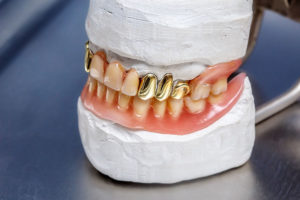
As one of the strongest crown types, you won’t worry too much about gold crowns falling out or breaking when chewing something hard. Gold as the base metal alloy for dental crowns last longer than any other.
Although they’re noticeable and easy to spot wearing them in the front, you can restore your back teeth without too much attention.
Thankfully, dentists won’t need to remove as much tooth structure to attach these crowns as they would with other options.
| Gold Crowns | |
| Pros | Cons |
| Status symbol | Expensive |
| Durable | Don’t look like natural tooth |
| Less tooth structure removed | Allergies for some |
| Long-lasting | |
| Front and back teeth |
2). Porcelain Crowns

Unlike gold and metal types, you can restore a brilliant smile with porcelain crowns. Resembling natural teeth, most coworkers and family members won’t be able to tell the difference.
Dentists make them from ceramic, so watch out for their shorter lifespan. Porcelain crowns aren’t as durable for chewing and clenching against other teeth.
| Porcelain Crowns | |
| Pros | Cons |
| Look like natural teeth | Less durable |
| Biocompatible (no metal) | Don’t withstand chewing forces |
| Front teeth | |
| Cheap |
3). Porcelain Fused to Metal Crowns
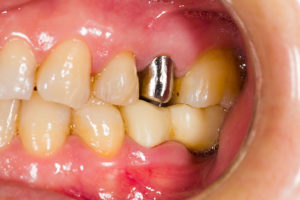
A mixture of metal and porcelain crowns is the porcelain fused to metal crowns. Get both the strength of metal and a natural appearance in a single crown instead of one or the other.
Patients often complain about a “greyline” that appears from the metal portion of the tooth. And if the porcelain cap ever chips, you’ll only have metal left to protect the tooth.
| Porcelain Fused to Metal Crowns | |
| Pros | Cons |
| Durable | Grey gumline from metal |
| Less than porcelain | Teeth clenchers wear down more easily |
| Cheap |
4). Zirconia Crowns
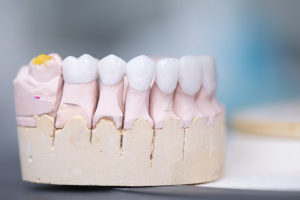
Zirconia crowns are another attempt to masquerade the metal found in durable crowns. A majority of our patients claim the match is successful.
Dentists love this crown type because they’re biocompatible, or not made of metal. Have peace of mind if cementing metal artificial teeth doesn’t sit right with you.
The only downside is wearing over time, similar to porcelain crowns.
| Zirconia Crowns | |
| Pros | Cons |
| Look like normal teeth | Difficult to adjust |
| Durable | Crowns wear down more easily |
| Long-lasting | |
| Biocompatible (no metal) |
5). E-Max Crowns
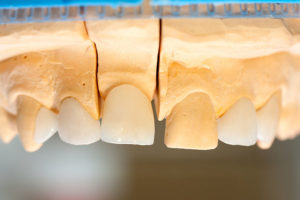
Made of lithium disilicate, purchase another type of ceramic crown that is lighter and thinner than traditional porcelain options. We compare e-max crowns to purchasing a material similar to glass, but they last far longer.
They’re more durable than zirconia and are arguably the best option for blending into your natural smile. Be aware that e-max crowns are also the most expensive, but are worth every penny.
| E-Max Crowns | |
| Pros | Cons |
| Look like normal teeth | Expensive |
| Durable | Higher risk of failure the more you do at once |
| Front and back teeth |
What is the cost of dental crowns?
Dental crown cost varies, depending on the specific type you choose.
The following are the approximate costs for each type of crown. However, you’ll need to speak to your dentist to figure out how much procedures cost and whether they’d charge you more with a specialist referral.
| Crown Type | Price |
| Gold | $600 to $2,500 |
| Porcelain | $800 to $3,000 |
| Porcelain Fused to Metal | $500 to $1,500 |
| Zirconia | $800 to $3,000 |
| E-Max | $800 to $3,000 |
Is there Insurance for Dental Crowns?
Dental insurance exists for crowns but may not exist for every type since they vary in price. You can take a look at our list of accepted insurance carriers and call them to see whether they’ll cover the price of a crown.
Or you can speak to one of our staff members and they can call the insurance company for you. Without insurance, East Valley Dental Professionals still offers affordable crowns and/or cleaning visits that maintain crowns for longer.
We Can Help You Choose the Right Dental Crown
As is the case with dental implants, you may have outstanding situations that make it impossible to get a crown done at the moment, such as periodontal disease or not having enough jawbone.
Our dental professional, Dr. Nathan Smith, can take inventory of all these possibilities when consulting you with a dental services appointment.
He’ll do everything he can to recommend the crown type that costs you the least overall. Installing a temporary crown, you’ll be prepared to move into the permanent crown that benefits your oral health the longest.
Call our expert dental staff at (480)-838-3033 so we can get you scheduled for a crown visit. There’s minimal to no waiting time and we can even see you during the early morning hours or the busy lunch rush.
The post Types of Dental Crowns appeared first on East Valley Dental Professionals.
]]>